






Summary
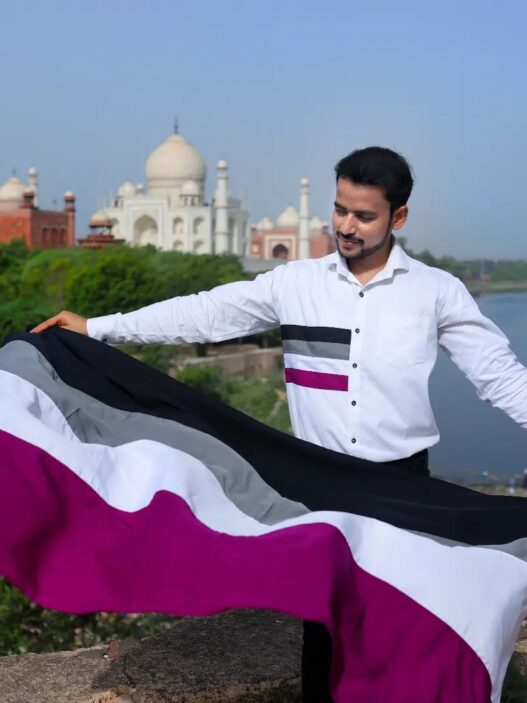
Born in 1998 in Mohammadpur, Dhaka, Sourav grew up navigating the quiet tension between traditional cultural expectations and his own inner truth. Now twenty-one and currently pursuing higher education, he has become a thoughtful voice for a different kind of queer experience. Sourav identifies as a gay man, yet he purposefully challenges the conventional scripts of gay life.
By embracing the “Side” identity, he moves beyond the binary of penetrative expectations, instead centering his life and relationships on a slower, more intentional form of intimacy. For Sourav, love is defined not by rigid sexual roles, but by the warmth of patience, the comfort of presence, and the quiet rhythms of everyday care.
Biographical Information:
- Name: Sourav (pseudonym),
- Age: 28
- Place of Birth: Bangladesh
- Current Residence: Germany
- Languages Spoken: Bengali, English, Basic German
Interviewer: Sourav, thank you for joining us. What actually mean by Sider ?
Sourav: Happy to be here. “Side” is a term that has recently gained more visibility, although many people have identified this way long before it had a name. It helps name a valid sexual orientation that doesn’t fit neatly into the usual “top” and “bottom” framework.
A “Side” typically refers to someone, often in gay male communities, who is sexually attracted to men but does not include anal penetration as part of their sexual expression or desire. Instead, their sense of sexual intimacy and satisfaction centers on other forms of physical and sensual connection.
This can include things like kissing, oral sex, mutual masturbation, frottage, and other forms of touch-based intimacy. These aren’t considered “alternatives” or compromises, but rather the primary ways desire and connection are experienced.
Importantly, being a Side is not about rejecting sex. It’s about broadening what sex can mean beyond penetration-centered models, recognizing that intimacy, pleasure, and sexual fulfillment can exist fully and meaningfully in different forms.
Interviewer: Do people who identify as “Sides” still tag themselves as “Gay”?
Sourav: Absolutely. Being a “side” refers to a sexual preference or way of engaging sexually, not a separate or lesser sexual orientation. I am a gay man, and that is my primary identity. I’m attracted to men, I date men, and I build relationships with men. “Side” is just a label that helps me communicate my specific sexual boundaries and preferences within the broader gay community. It doesn’t make me “less gay”; it just means my “menu” of sexual activities looks a bit different than the mainstream expectation.
Interviewer: Does it feel like a “second coming out” to express this?
Sourav: It really can. You come out as gay, and then you have to “come out” again as someone who doesn’t fit the expected script of how gay men are supposed to have sex. It requires confidence, but it’s incredibly freeing when you finally say, “This is what I enjoy, and this is what I don’t.” Once you stop trying to force yourself into a box that doesn’t fit, it actually makes your dating life and your relationships much more authentic.
Interviewer: What are the psychological distinctions between ‘romantic attraction,’ ‘sensual desire,’ and ‘sexual fetishism’ when you experienced toward the same gender?
Sourav: That’s a great distinction. For me, they aren’t the same thing, but they definitely overlap.
“Attraction” is the broader umbrella—it’s that magnetic, romantic, and aesthetic chemistry I feel toward a person. It’s the desire to be close to them, to learn about them, and to share my life with them.
When you use the word “desire” to mean a specific sexual preference or, as you may put it, a fetish, that’s where the “Side” identity comes in. Being a Side isn’t a lack of desire; it’s a specific focus. Some people’s sexual “fetish” or primary mode of gratification is centered on anal penetration. My “desire”—if we’re using that term for my preferred sexual acts—is centered on everything else: oral intimacy, tactile closeness, and skin-to-skin connection.
So, being a Side doesn’t mean I’m not experiencing sexual desire. It just means my specific brand of desire follows a different route to the same destination: intimacy and pleasure. It’s a completely authentic, deep pull toward another man—it just happens to be a version of sex that doesn’t involve the act society usually insists on.
Interviewer: The dictionary often defines “sex” as intercourse. Does your “sensual attraction” rely on that definition?
Sourav: Not at all. That’s a very narrow, “all-or-nothing” view of sexuality. If we define “sex” only by penetration, we ignore the incredible depth of intimacy found in oral sex, touching, and all the other ways we connect physically. When I feel sexual attraction, I’m thinking about that full-body experience of pleasure and closeness. My orientation is toward men, and that’s independent of whether or not penetration is part of the equation.
Interviewer: When dating, do you find that people respect your boundaries regarding sexual acts?
Sourav: It’s a mixed bag. Historically, there has been a lot of pressure within the gay community to identify as either a “top” or a “bottom.” When I explain that I’m a “side,” some people are respectful and curious, while others dismiss it as “immature” or assume it is the result of trauma or PTSD. On a few occasions, people even suggested that I might be asexual. That prompted me to learn more about asexuality, and I found that the label felt comfortable and authentic.
Later, I joined a few asexual community meetups, where I felt much more welcomed than I had in many gay spaces. Over time, I came to see myself as part of the broader asexual (ace) community.
Building relationships has required clear communication. I’ve learned that the right partner is someone who sees my boundaries not as a limitation, but as a preference that deserves respect.
That said, respect for boundaries is ultimately an individual trait rather than something defined by any community. Many people across the queer community place a strong emphasis on consent and communication because they have had to navigate situations where their own boundaries were not respected.
Interviewer: In today’s dating-app-driven world, what do you wish people understood about the Side identity? Have you found it easier to navigate relationships and connections through asexual-spectrum dating platforms, or through mainstream apps such as Grindr? What has your experience been like on these different platforms?
Sourav: That’s a personal choice. Apps like Grindr have historically been very penetration-focused, which can be frustrating, though in 2022 they’ve added “Side” as an option, which is a big step forward. Some prefer apps that are more focused on romance or alternative sexualities, while others just use mainstream apps and are upfront in their profiles. For me, it’s about being honest about what I want and finding someone who is on the same page. The app matters less than the person you’re talking to.
Experiences on apps like Grindr versus asexual or romantic-focused apps vary wildly. Grindr is traditionally designed for high-frequency, immediate sexual connection, while asexual-friendly spaces are designed for those seeking non-sexual emotional bonds. The “comfort” a person feels is usually determined by whether they are looking for a sexual partner or a romantic/platonic one, regardless of their sexual orientation.
Interviewer: Finally, Do “Side” individuals feel more comfortable with the asexual-homoromantic community?
Sourav: Some might, but it’s a spectrum. Asexual individuals may experience little to no sexual attraction, whereas many “Sides” do experience sexual attraction—we just have different physical preferences for how we express it. Some “Sides” might find solace in asexual communities if they want to avoid the “hookup” culture, but others feel perfectly at home in the broader gay community, provided they find people who don’t prioritize penetration above all else.
Note: This interview draws on a sociological understanding of “sides” as individuals who experience attraction and/or prefer non-penetrative sexual practices. Some people understand this as distinct from asexual identities, while others situate it within a broader sexual spectrum. Both are frequently misunderstood within heteronormative frameworks that center penetration as the normative model of sexuality.