

Background Information
Name: Omar Hossain
Location of Origin: Narayanganj, Bangladesh (Current Residence: Dhaka)
Age at Incident: Class 8 (approx. 13–14 years old)
Year of Contact: 2021
Context of Incident: Secondary School (Class 8), Narayanganj / Cox’s Bazar / Dhaka, Bangladesh
Assigned Demographics: Assigned Male at Birth (AMAB), Identifies as Non-Binary and Asexual
Primary Concern: Peer-inflicted violence, asexuality misconceptions, institutional betrayal, and the impact of the lack of formal sex education.
⚠️ TRIGGER WARNING:
Content Warning: The following document is an academic oral history record that contains explicit descriptions of severe bullying, non-consensual nudity, physical assault, and sexual abuse/coercion targeting a minor. Reader discretion is advised.
ANOAQA Interviewer: Thank you for sitting down with me today, Omar. I know it takes a lot of strength to be here. We can go as slowly as you need, and you can stop or take a break at any point. To begin, could you provide some baseline context about your background—specifically your upbringing, development, and your journey regarding your gender identity and sexual orientation?
Omar Hossain: I was born and raised in Narayanganj. Although I was assigned male at birth, I identify as non-binary. I attended a traditional Bengali-medium all-boys school, an environment where even uttering these terms resulted in my peers pathologizing and labeling me as “পাংকু” (over smart). Last year, during Class 8, my reality shifted in a very destabilizing way. To be completely honest, prior to that, I had been enduring an intense internal conflict. I watched everyone around me constantly obsessing over romance, physical attraction, and girls—feelings that were completely absent within me.
It was during this period of isolation that I first discovered the term “asexual.” Finding a precise, scientifically valid term to articulate my internal reality felt entirely miraculous. It felt as though an immense psychological burden had been lifted. Because of that profound relief, I foolishly believed I could share this breakthrough with the peers I interacted with daily. I genuinely thought it would foster understanding.
ANOAQA Interviewer: Could you elaborate further on the dynamics with your peers at school? How did they perceive you after this disclosure?
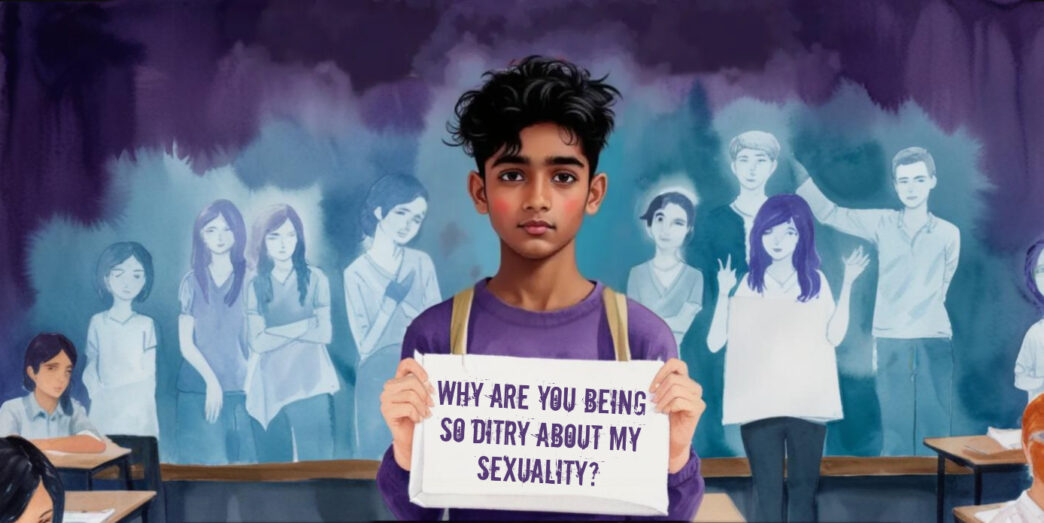
Omar Hossain: Their response was antithetical to what I had anticipated. They made zero effort to comprehend what asexuality actually entailed. Instead, my disclosure immediately triggered severe, relentless peer victimization. Because our societal framework completely lacks healthy, objective discourses on sexual diversity, they tried to force my identity into pre-existing, highly pathologized stigmas. They concluded that “asexual” was simply a sophisticated, westernized euphemism I was using to mask impotence or sexual dysfunction. They would look at me and say bluntly, “You’re just impotent, you can’t get an erection, and now you’re fabricating fancy English words to sound smart.”
ANOAQA Interviewer: Defending your identity against that level of systemic invalidation must have been profoundly exhausting. How did you navigate that hostile climate? Did you attempt to mitigate their ignorance through further education?
Omar Hossain: Yes, continuously. Attending school every single day transformed into an exhausting battle to legitimize my own truth. I was deeply invested in correcting their misconceptions. They would form predatory circles around me in the classroom, subjecting me to a barrage of deeply invasive and violating questions—treating it as an ongoing interrogation.
Yet, I didn’t retreat. I exercised immense patience, answering every single inquiry and meticulously unpacking the actual definition of the term. But regardless of how clinical or transparent my explanations were, their ignorance and predatory mockery never waned. It was as if they were deliberately choosing to remain oblivious. Looking back, it is clear they weren’t seeking knowledge; they were conducting a hostile interrogation.
ANOAQA Interviewer: Given that you consistently and patiently tried to educate them, did you ever observe any shift or de-escalation in their behavior? How did the institutional climate evolve following these interactions?
Omar Hossain: The true nature of the hostility became unmistakably clear during our annual school field trip (picnic) at the conclusion of the academic year. In Bangladeshi secondary schools, these long-distance excursions—particularly to destinations like the naval base or coastal areas in Cox’s Bazar—follow a distinct tradition. Students are segregated into small cohorts of four and assigned to shared hotel rooms. On this specific excursion, parental chaperones were not permitted, so my mother did not accompany me. It was an entirely unmonitored, all-boys rooming arrangement, which typically breeds a hyper-masculine environment for hazing. What I completely failed to realize was that long before we even entered that room on the final day of the trip, three of my roommates had already orchestrated a highly coordinated conspiracy. They had set a trap specifically targeting me.
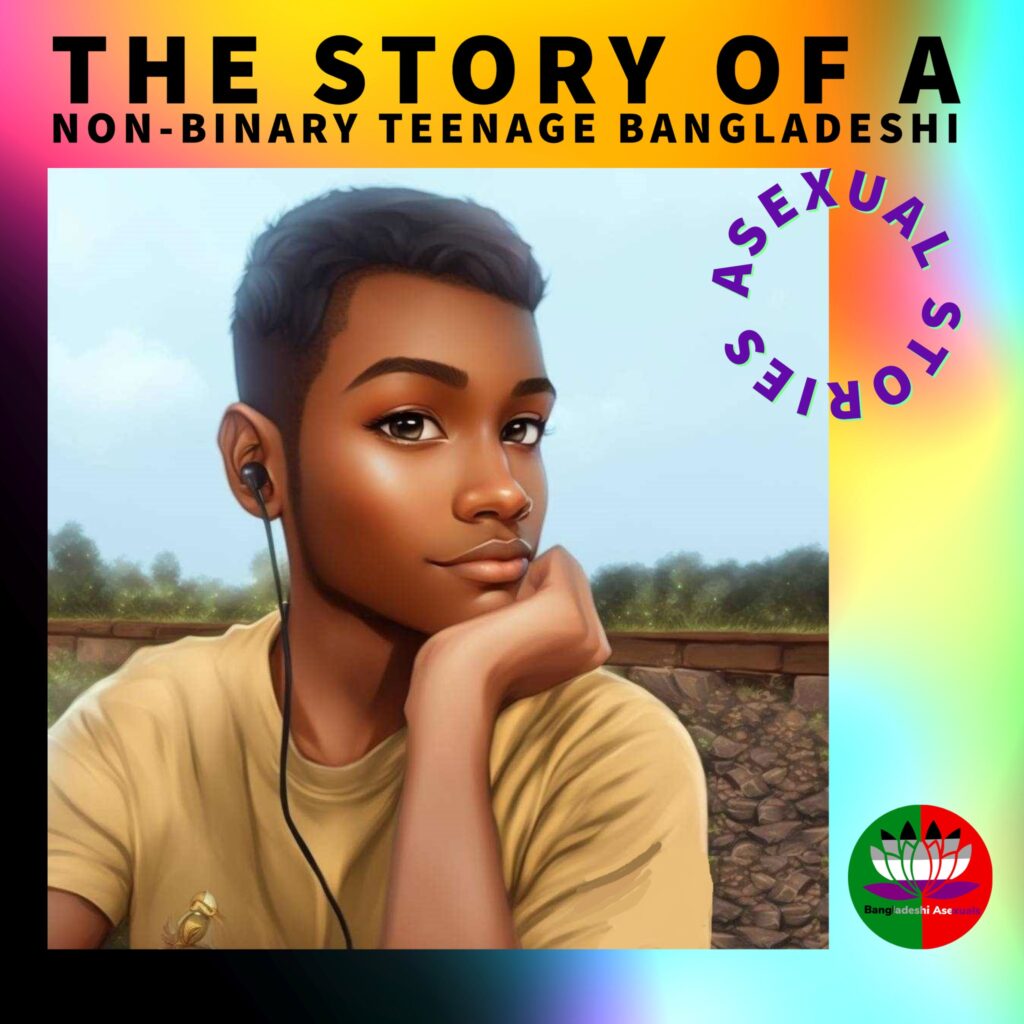
ANOAQA Interviewer: So their curiosity was never benign; it was a precursor to targeted, severe violence. How did you first realize that this verbal harassment was escalating into a physical and psychological conspiracy? Could you walk us through the mechanics of that incident?
Omar Hossain: We returned to the room late in the evening, completely exhausted after a full day of fun activities (Nau Bihar) and mandatory school cultural programs. The moment we crossed the threshold, the atmosphere shifted instantly into overt hostility. They aggressively demanded, “Let’s watch pornography.” Because of my sheer exhaustion, I initially refused. However, under sustained peer pressure, I eventually yielded and agreed to watch.
Suddenly, the dynamic turned violently physical. The three of them swarmed me, pinning me down in a corner and forcefully throwing me from a seated position onto my back. They produced a laptop, and in an incredibly menacing and aggressive tone, delivered an ultimatum: I was going to be forced to watch pornography, and I had to do so completely naked.
ANOAQA Interviewer: What was their stated rationale for forcing this material on you? Even within the context of a hyper-masculine peer group or an all-boys room fantasy, how did they articulate or justify this coercion?
Omar Hossain: Their demeanor became overtly predatory and vicious. They explicitly stated that viewing this material was a mandatory “task”—an experimental trial designed to test my identity. Instantly, they enforced their baseline condition: they stated that I was not permitted a single thread of clothing on my body and had to sit before them entirely exposed. I immediately began screaming and resisting.
As I attempted to break free from the corner, they used collective physical force to overpower and restrain me. They violently yanked, pulled, and tore the clothing completely off my body. As I lay there subjected to forced nudity, I overheard them whispering among themselves, saying: “If he is genuinely asexual, his biology will remain entirely unresponsive to this stimuli. If he gets an erection, it proves his entire identity is a fraudulent act. And if he is proven a liar, his punishment will be that he has to ‘satisfy’ us.”
ANOAQA Interviewer: They attempted to weaponize involuntary physiological responses to invalidate your identity and justify sexual coercion. Did you attempt to seek intervention from school authorities or threaten to report them at that moment?
Omar Hossain: I explicitly told them that the moment morning arrived, I would file a formal complaint with the faculty chaperones. In response, they violently grabbed my head and forced my face toward the screen, forcing me to view the material. I continuously closed my eyes and wrenched my head away, desperate to withdraw from this horrific violation.
When they realized that I completely refused to comply or acquiesce to their psychological experiment, their behavior escalated into severe physical assault. Utilizing my forced vulnerability and nudity, the three of them began beating me like an animal. Because I refused to legitimize their “test,” they subjected me to a relentless barrage of kicks, punches, and severe physical trauma right there on the floor of the room.
ANOAQA Interviewer: Experiencing that degree of severe peer victimization and physical violation is an extraordinary trauma, Omar. The following morning, were you able to disclose this assault to anyone, and did you receive any institutional support?
Omar Hossain: The next morning, I went directly to the supervising teachers. I provided a comprehensive, explicit account of the forced nudity, the physical assault, and the coordinated victimization I had sustained. However, the institutional framework within our educational system is fundamentally unequipped and unwilling to safeguard vulnerable LGBTQ+ students. Rather than enacting disciplinary measures against the perpetrators, the faculty responded to my disclosure with profound disgust and systemic victim-blaming.
They completely dismissed my psychological trauma, weaponizing the derogatory colloquialism “Ichchre Paka” (accusing me of being precociously or deviantly fixated on adult themes). They effectively reframed my disclosure of assault as a disciplinary infraction. Because I had broken the institutional omertà by speaking openly about a taboo subject like sexuality, they subsequently weaponized the incident to permanently expel me from the institution.
ANOAQA Interviewer: This form of institutional betrayal significantly compounds the initial trauma of victimization. Did you or your family attempt to pursue any legal remedies or administrative appeals?
Omar Hossain: No. I knew intuitively that navigating the legal system as a marginalized student would only expose me to further state-sanctioned and social endangerment. The structural fallout of this event has severely derailed my academic trajectory. The administrative rationale provided by the school board for my formal expulsion was deeply humiliating. They engaged in total victim-blaming, documenting that I was a disruptive influence who was “corrupting the school environment.” The official record stated that I was responsible for introducing taboo, “adult” discourses into the school space and had destabilized institutional discipline by making “abnormal and bizarre” claims regarding my identity. They penalized me to cover up their own institutional failure and lack of basic human rights education.
To compound this, when my father learned of the expulsion, he subjected me to severe domestic violence at home and placed me under indefinite house arrest after sunset. This sudden, catastrophic disruption to my education, followed by severe familial hostility and rejection, completely shattered my psychological resilience. The person I was before this trauma and the person I am now feel like two entirely distinct individuals.
What human rights concerns does this case raise?
In Bangladesh, comprehensive sex education is heavily restricted or non-existent within the standard academic curriculum. Furthermore, concepts surrounding diverse sexual orientations and gender identities are widely dismissed by the general public as “Westernized” imports.
Because formal representation and objective discussions regarding sexual diversity are entirely absent from the public sphere, pervasive misconceptions and harmful myths thrive. These assumptions are often rooted in personal biases, leading to severe social stigma and dangerous environments for individuals who do not conform to heteronormative or allosexual norms.
Denial of the Right to Information (Comprehensive Sexuality Education): The state’s systematic omission of objective sexual education creates a structural vacuum. This ignorance directly fosters a hostile school climate where peers feel entitled to violently interrogate and experiment on non-normative bodies.
Failure to Protect and Access to Justice: The victim was denied legal redress due to a well-founded fear of secondary systemic persecution, leaving perpetrators to operate with total impunity.
The Right to Education and Non-Discrimination: Instead of penalizing the perpetrators, school authorities weaponized victim-blaming rhetoric, labeling the disclosure of assault as a disciplinary infraction. The subsequent formal expulsion directly violated the student’s right to a safe education based on their sexual orientation.
ANOAQA Assessment Table
| Analysis Dimension | Case Findings |
| Primary Systemic Failure | Total absence of institutional frameworks for sex education or sexual diversity awareness in the Bengali education system. |
| Peer Dynamics | Conversion of an orientation (asexuality) into a subject of hostile “scientific” or physical experimentation by peers. |
| Nature of Abuse | Forced nudity, attempted sexual coercion, and severe physical assault under the guise of “proving” a classmate’s identity false. |
| Institutional Victim-Blaming | Use of cultural idioms (Ichchre Paka) by authority figures to minimize trauma and shift culpability to the victim. |
| Secondary Victimization | Administrative expulsion of the victim to preserve institutional taboos, cementing the isolation of marginalized students. |





Your dedication to providing quality content is truly admirable. I\’m a fan of your work.
Your content is a go-to source for me when I need information. Great work, as always!
I appreciate your support. I\’m glad to know my insights resonate with you.