Dark Mode Light Mode

Keep Up to Date with the Most Important News

By pressing the Subscribe button, you confirm that you have read and are agreeing to our Privacy Policy and Terms of Use
Case Study Documentation: Eshan
Case Study Documentation: Ananna Mamun
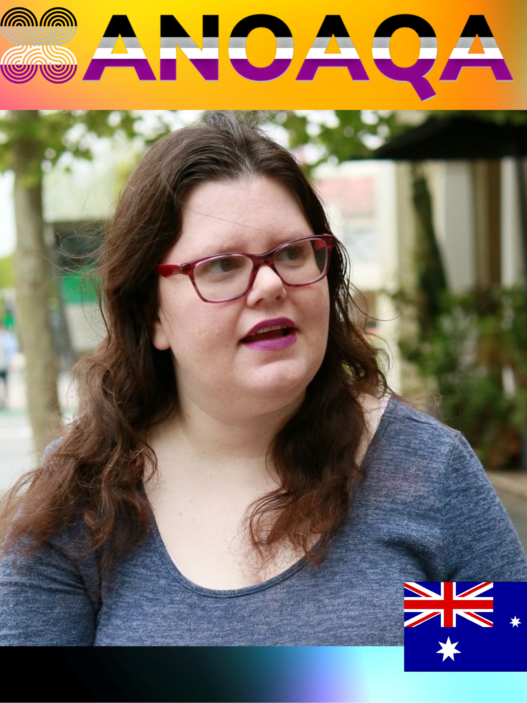
ANOAQA: The world's first initiative dedicated to publishing Asexual and Aromantic literature, challenging the hypersexual lens of socio-cultural norms.

Case Study Documentation: Ananna Mamun

Summary

Biographical Information:

  • Name: Ananna Mamun(pseudonym),
  • Age: 39
  • Place of Birth:  Bangladesh
  • Current Residence: Uttara
  • Languages Spoken: Bengali, English

Dipa: Let’s start with the beginning. Where were you born and how did your childhood feel?

Ananna: I was born in Uttara. It’s a place that looks orderly if you only look at it from the road — houses, apartments, schools. Inside the house, things were small. My parents had expectations. They wanted the family to look a certain way. I remember being first on the roll call at school, the one the teachers said would make the family proud. That word — proud — followed us like a slogan at every dinner.

Dipa: Did you ever feel your life didn’t match that picture of pride?

Ananna: Always. I felt different in ways they could not name. At home the difference became a kind of economy: jokes, silences, my mother asking, almost like a verdict, “Will you be the disgrace of our line?” It wasn’t necessarily cruelty arranged as a plan — more like a steady, practiced shrinking. My father carried shame like extra clothing. My siblings learned to make me invisible. But invisibility is heavy; it is a weight you carry until you cannot stand.

Dipa: When did the city itself become part of your story?

Ananna: After school, when I worked in Gulshan and other office areas — the city taught me new rules. There you are supposed to have a place in the ledger: job title, salary, the respect that follows. I had competence; I had work that paid. But the same office that bowed to your competence found ways to laugh you away. Someone would say, “She isn’t really a woman,” or “She isn’t really —” and the sentence hung like a threat. That was a different kind of violence, quieter but everywhere.

Dipa: You told me earlier about an episode in the mosque. Could you describe that?

Ananna: Yes. I go to the mosque sometimes, because habit and because my mother believed it would keep us respectable. Once, during Friday prayer, a group of men pushed me out. They said, “Take her away! Such people cannot enter the house of God.” A young man hit me in the face: the blood was quick and raw. The imam smiled as if to say violence had its uses. That day taught me the double edge of religion: it can shelter you, and it can grow teeth.

Dipa: What happened after that? Where did you go for shelter?

Ananna: We found each other. That is where the city’s fissures became our home — secret rooms, rooftops, a friend’s flat where the breeze felt like a promise. Men who loved men, women who took new names for themselves, people learning which pronouns won’t kill them. They called me “the one to rely on.” I learned to make calls at two in the morning, to take someone to the hospital with my own hands, to find a bed, to find a job. It was not heroic — it was a ledger of favors. But it meant people survived.

Dipa: At what point did helping others turn into political engagement?

Ananna: It wasn’t a single moment. When you are always the person who makes the calls, you start to see how power works. A bed is not just a thing — it’s access. A job is not just a wage — it’s a reprieve. I began to attend neighborhood committee meetings and local political gatherings because that is where decisions get made about land, about funds for shelters, about who gets official recognition and who is pushed to the margins. If I had influence there, I could move resources to people who had nowhere to go. It was dangerous and small, but it mattered.

Dipa: Did you ever consider leaving — emigrating? Many people in your situation think about leaving.

Ananna: I did. Leaving is a clean sentence. The idea would flare — new sky, fewer old names — and then die down. But I would always think: if all of us vanish, who will stand for those left behind? If I go, the ones who cannot go will be alone. So I decided to stay. I did not promise heroics. I decided instead to be present. Endurance is a choice and in choosing to endure there is rebellion.

Dipa: You used the phrase “crocodiles in the water, tigers on the bank.” Can you say what that means for you?

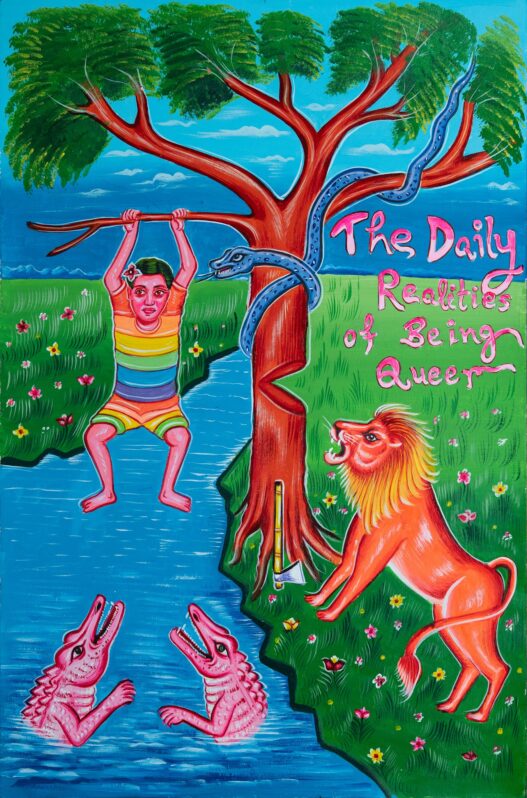
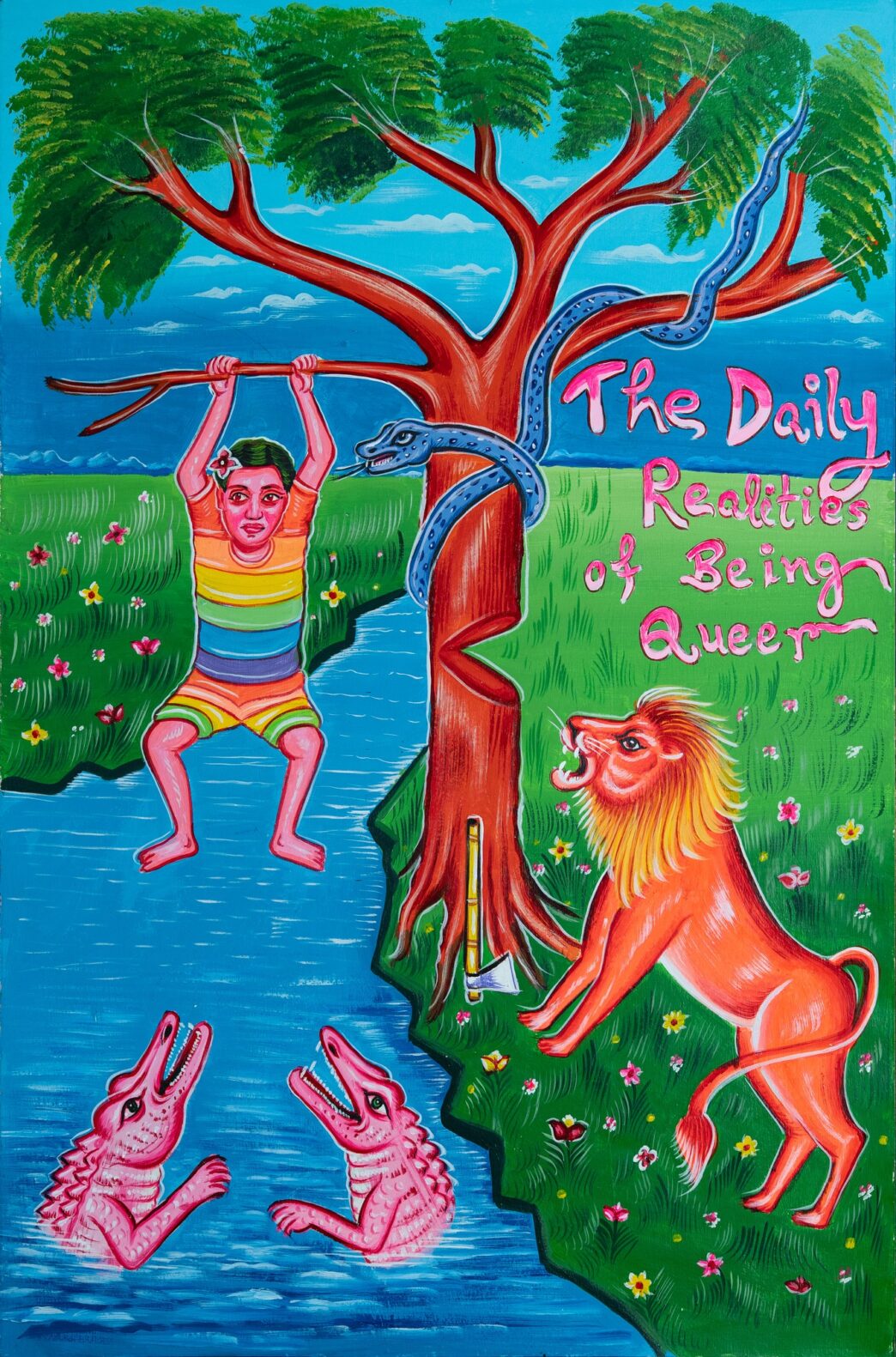
Ananna: It means dangers are everywhere. In the office, on the street, at prayer, at home. Crocodiles have gaps in their teeth; tigers sometimes miss a step. Between their teeth and the tiger’s paw, there is space to breathe. That space is small and it requires alertness. It’s not optimism. It’s strategy. You learn to swim in the river without surrendering everything to the current.

Dipa: Who were the people you sheltered? What kinds of needs came to you?

Ananna: Students kicked out of hostels. Young people who had been beaten at home. People left after failed marriages. Some needed a phone call; others needed money for an operation. Once, in the middle of the night, I carried someone to the hospital; there was a smell of disinfectant and someone was crying. I made the calls, I negotiated, I stayed on the line. They started to call me when the dark felt thick. That keeps you awake — the knowledge someone is depending on you.

Dipa: What toll did that take?

Ananna: It wears you. There is a hollowness that is not dramatic; it is like a church bell whose clapper has rusted away. You get tired of being the harbor. There are nights I stand in front of the mirror and ask: Am I alive, or dying a little each day? The weight of other people’s survival is heavy. Sometimes you resent it. Sometimes you accept it as your work.

Dipa: Have you experienced any moments of real change — small victories?

Ananna: Yes. Once we stopped a landlord from evicting a young person who had nowhere to go; we got a temporary injunction. Another time a committee agreed to fund a small safehouse. These are small things, but they mean someone slept that night. That is enough to keep going.

Dipa: What do you want people who read or hear this to know?

Ananna: That living is a form of resistance. You do not need to be a hero. You need to stay. You need to keep a line open. I tell young people: do not feel ashamed of staying. Do not feel like leaving is the only option. If you stay, you make a place for the next ones. Also — ask for help. We are not islands. Build your people.

Dipa: Final question. What do you hope for yourself and for those who come after?

Ananna: I hope for fewer nights where the only option is to hide. I hope for systems that make harbor unnecessary, but until then I hope we keep harboring each other — with honesty, with tenderness. For myself? I hope I can lighten the ledger that I carry. I hope to pass on ways to survive that do not cost your soul.

Dipa: Thank you, Ananna. Is there anything you want to add that we didn’t cover?

Ananna: Tell them this: the city is cruel, yes, but it also makes rooms. The work is messy. Stay messy. Stay alive.

Dipa: This concludes the interview with Ananna Mamun on 10 June 2025. Thank you again.


Keep Up to Date with the Most Important News

By pressing the Subscribe button, you confirm that you have read and are agreeing to our Privacy Policy and Terms of Use
Add a comment Add a comment

Leave a Reply

Your email address will not be published. Required fields are marked *

Previous Post

Case Study Documentation: Eshan