
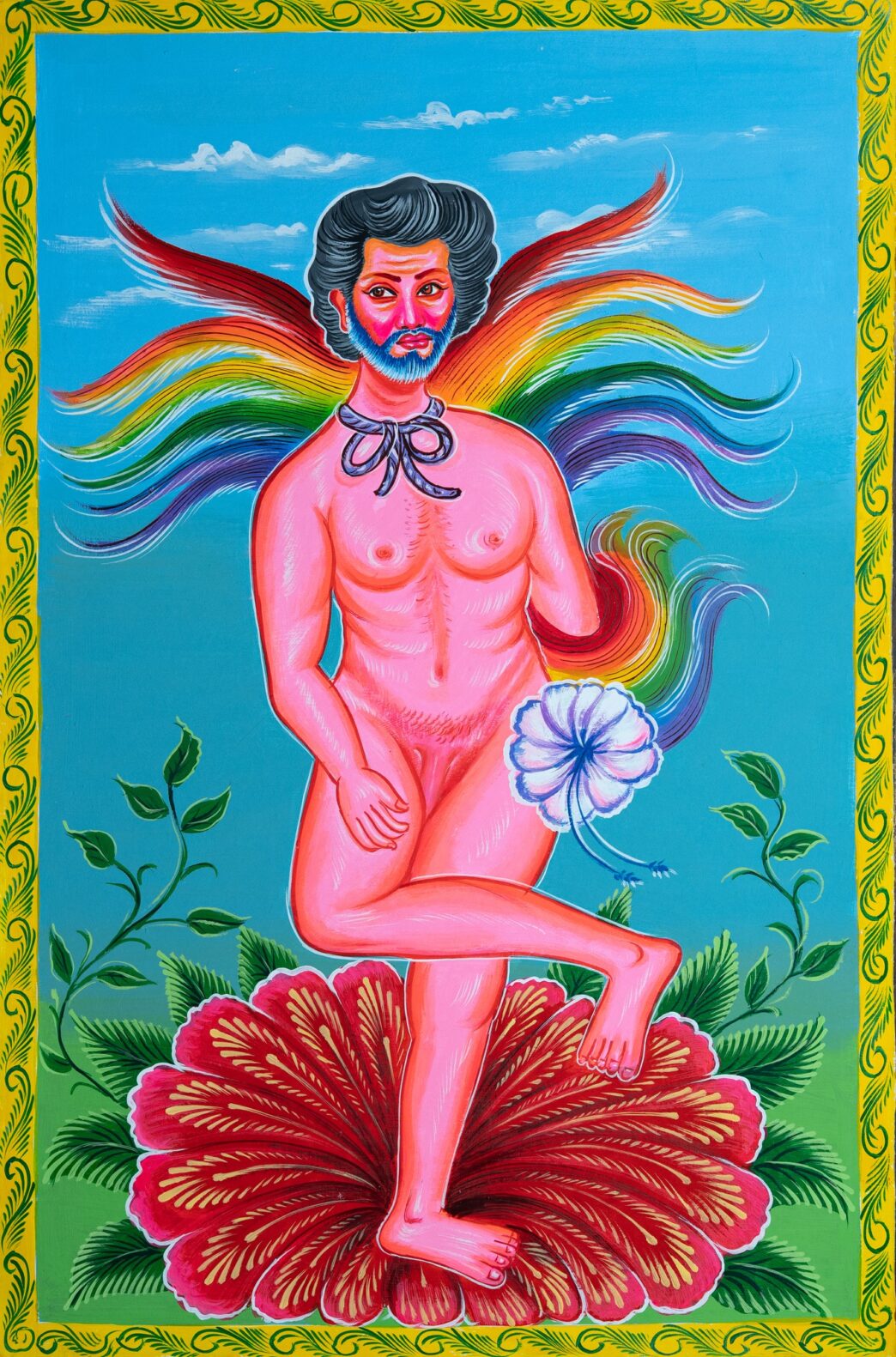
Interviewee: Mostafa Manan (pseudonym)
Age: 57
Current Address : Dhanmondi
Background: Retired Government Official
Biographical Note
Mustafa Monon is a 57-year-old retired government official from Bangladesh who has emerged as a dedicated advocate for the aging LGBTQ+ community. Having navigated a life outside traditional heteronormative structures, Monon identifies the specific vulnerabilities faced by his peers in their later years, particularly the lack of familial support systems and social safety nets. He emphasizes that the loneliness experienced in old age is often misrepresented; rather than seeking sexual intimacy, many older men are in search of genuine companionship—someone to share meals, conversations, and the quiet rhythm of daily life.
Deeply concerned by the risks of exploitation and emotional manipulation his peers face on digital platforms, Monon strives to ensure that older queer individuals can navigate their later years with greater dignity, comfort, and the security of a supportive community.
Life and Longevity Among Asexual Men
Interviewer: Could you begin by telling us about yourself and the journey of your life?
Mustafa Monon:
I recently retired after a long career in government service. Looking back, much of my life was shaped by work, duty, and personal world. My career demanded a great deal of time and energy, and whatever free time I had was often devoted to my personal gardening . In many ways, those pursuits became the centre of my life.
Interviewer: How would you describe your experiences of relationships, intimacy, and identity during your younger years?
Mustafa Monon:
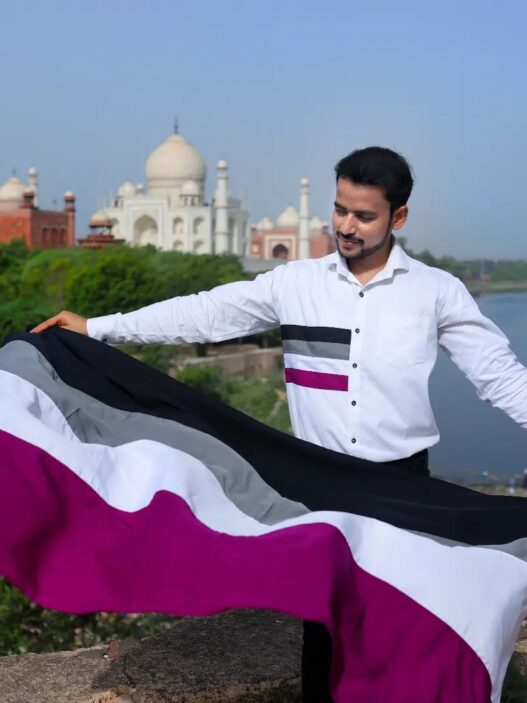
I identify as a homoromantic asexual man. Throughout my life, I have experienced romantic attraction toward men, but sexual attraction has never played a significant role in my relationships. For much of my younger years, I simply identified as gay because I did not have the language to describe my experiences more accurately.
The term “asexual” was not widely known or discussed when I was growing up, and I only encountered it much later in life. Discovering the concept of asexuality helped me better understand myself and make sense of feelings and experiences that had long differed from those of many other gay men around me.
When I was younger, I occasionally attempted dating and explored the possibility of romantic relationships. However, my career was always my primary focus. The demands of government service were intense, and my creative interests occupied much of the remaining time. As a result, I never devoted much energy to building long-term romantic partnerships.
At the time, this did not feel like a loss. I enjoyed my independence and found fulfillment in my work and personal interests. Solitude felt comfortable, even desirable. I valued having my own space and the freedom to live according to my own rhythms.
Interviewer: Did your relationship with solitude change as you grew older?
Mustafa Monon:
Yes, very significantly.
When people are young, life is filled with goals, obligations, and movement. There is always something to do and somewhere to go. Solitude can feel like freedom because it exists alongside purpose and activity.
Retirement changed that reality. Suddenly, the routines that had structured my life disappeared. The daily interactions with colleagues ended. The pressures and responsibilities that once occupied my time were gone. Gradually, I began to realize that human beings do not live on work alone.
The solitude that once felt comforting slowly transformed into loneliness. The days became longer. There were fewer people to talk to and fewer reasons to leave the house. As I grew older, I came to appreciate how deeply human companionship matters. What had once felt like independence eventually became a source of emotional difficulty.
Interviewer: Do you think gay and heterosexual men are affected by loneliness in old age ?
Mustafa Monon:
Absolutely. From the outside, many people assume that gay men are protected from loneliness because they have extensive queer community networks, dating applications, and greater opportunities to find partners. However, I believe the reality is far more complicated.
The current phenomenon about male loneliness often focuses on men’s increasing isolation from friendship, emotional intimacy, and meaningful human connection. Gay men are not exempt from these challenges. In some respects, our experiences can be even more complicated because our lives may appear socially active while concealing profound emotional isolation.
Many people mistake visibility and access for connection. Being surrounded by people or receiving attention does not necessarily eliminate loneliness. Someone can appear socially connected while feeling deeply alone.
Interviewer: How do social expectations around masculinity affect homoromantic and asexual men?
Mustafa Monon:
The pressures of masculinity affect us just as they affect other men.
There is a common assumption that being gay automatically frees someone from traditional expectations of masculinity. In reality, many of us were raised with the same messages: showing vulnerability is weakness, expressing emotional needs is weakness, and asking for support is weakness.
As a result, many men struggle to acknowledge their desire for emotional closeness. Even within some queer spaces, emotional distance can sometimes be viewed as attractive, while openness and vulnerability are treated with suspicion. These cultural expectations make it more difficult to form meaningful relationships and contribute significantly to loneliness.
Interviewer: What are your thoughts on dating applications and digital forms of connection?
Mustafa Monon:
I think they have both positive and negative consequences.
When I was young, technologies such as dating apps did not exist. Many queer people, especially those living in smaller towns or rural areas, had no realistic way to meet others like themselves. Today, at least communication is possible.
At the same time, these platforms can create the illusion of intimacy without necessarily providing genuine emotional connection. A message, a match, or even a sexual encounter may provide temporary validation, but they do not automatically create meaningful relationships.
I have heard many people describe the same experience. After a hookup, they return home and realize they were hoping for something more. Perhaps they wanted someone to ask how their day had been. Perhaps they wanted companionship, understanding, or emotional care. Yet many people hesitate to express those desires because they fear rejection or worry that asking for more might result in losing what little connection they have.
Interviewer: Do you think loneliness among gay men differs from loneliness among asexual men?
Mustafa Monon:
In many cases, yes.
I should start with heterosexual men, loneliness is often described as a lack of connection with their own kid, grand kids. For gay men, the challenge is sometimes not the absence of connection but the absence of depth for partners. Applications such as Grindr, Scruff, and Sniffies make it possible to contact someone within seconds. Messages arrive quickly, meetings can be arranged easily, and from the outside it may appear that a person is socially connected. However, receiving attention is not the same as experiencing intimacy.
Many people feel desired but do not feel loved. They may feel visible but not truly known. They may experience attraction without experiencing security, care, or belonging. This distinction is important when discussing loneliness within queer communities.
On the other hand, I have heard many asexual people express a different kind of loneliness. Like me, they often spend years quietly waiting and wondering when a meaningful relationship might finally enter their lives. Rather than actively pursuing relationships, many remain hopeful in the background, carrying a private expectation that love or companionship will eventually arrive.
As they grow older, however, that sense of waiting can become increasingly painful. They begin to realize that time is passing and that the opportunities they once imagined may be narrowing. At the same time, they often develop a fear of not fitting into contemporary relationship cultures. Younger generations may have different experiences, expectations, languages, and ways of navigating intimacy and partnership. Even when older asexual individuals are welcomed within community spaces, they can sometimes struggle to relate to these changing social norms, leaving them feeling disconnected and out of step with the world around them.
Interviewer: What do you see as the greatest challenges facing older gay or homoromantic men?
Mustafa Monon:
For me, the greatest concern is ageing itself.
Old age can be one of the most vulnerable periods in the lives of men who have loved other men. Many of us have spent our lives outside conventional marriage structures. Many do not have children, and some have experienced varying degrees of estrangement from their families. As we grow older, these realities become increasingly significant.
People who have children or strong family networks often benefit from forms of emotional, social, and practical support that many LGBTQ+ elders do not have access to. Over time, the number of people available to provide care, companionship, or assistance may gradually diminish, making later life particularly challenging.
I often think that what society labels the “sugar daddy” phenomenon is frequently misunderstood. People tend to interpret these relationships primarily through the lens of sexuality, but I believe they often reflect something much deeper: the fear of ageing, loneliness, and the human desire for connection.
Many older men are not simply looking for sex. They are looking for someone with whom they can share a meal, celebrate holidays, have meaningful conversations, or simply spend quiet moments together. As people age, companionship often becomes more valuable than romance or sexuality alone.
At the same time, these relationships can be complicated by unequal social and economic circumstances. Some younger people may approach older men primarily because of their financial security rather than genuine emotional attachment. This can leave older individuals vulnerable to exploitation and deepen existing anxieties about trust, ageing, and loneliness.
Ultimately, I think the greatest challenge is not asexuality but isolation. The question many older gay men face is who will remain beside them when they need care, companionship, and support the most.
Interviewer: What role does economic security play in the lives of asexual individuals who live alone? How does financial stability influence their ability to navigate aging, housing, healthcare, and social support?
Mustafa Monon:
Economic security is extremely important.
I am fortunate to have some financial stability after retirement, but I often think about older LGBTQ+ people who do not have savings, family support, or secure housing. Loneliness is already difficult; when it is combined with financial insecurity, the situation becomes much more serious.
This vulnerability is one reason many older people turn to online platforms. Often they are simply looking for friendship or companionship. However, these spaces can also expose them to scams, financial exploitation, and emotional manipulation. Frequently, an older person may be seeking conversation and emotional support while a younger person is seeking something entirely different. These mismatched expectations can create painful situations.
Interviewer: What kinds of support do you believe older LGBTQ+ people need?
Mustafa Monon:
I believe dedicated support systems for older LGBTQ+ people are essential.
For example, hotlines or peer-support services could provide spaces where people can talk openly about their simple feelings, share memories, discuss loneliness, and seek emotional support without fear of judgment. Such services should not exist only for moments of crisis. They should also address the ordinary loneliness that many people experience in everyday life.
As people age, many discover that what they need most is not necessarily romance or sex but human connection. Sometimes simply knowing that someone is willing to listen can make an enormous difference.
I believe that regular opportunities for conversation, mutual support, and community engagement could help older LGBTQ+ people maintain dignity, comfort, and a stronger sense of belonging.
Interviewer: What message would you like to leave for future generations?
Mustafa Monon:
I would like people to understand that loneliness is not simply the condition of being alone.
Sometimes loneliness comes from feeling unable to express one’s full self. It emerges when people feel they must hide their fears, vulnerabilities, desires, or emotional needs.
Human beings need companionship, but even more than that, they need relationships in which they can exist authentically. As I have grown older, I have learned that people are not ultimately searching only for sex, nor only for recognition. What most people seek is someone before whom they can be fully human.
Every person deserves to age with dignity, care, and a sense that their life story matters. Listening to older LGBTQ+ people and creating safe social spaces for them is not simply an act of kindness—it is a matter of rights, responsibility, and social justice.