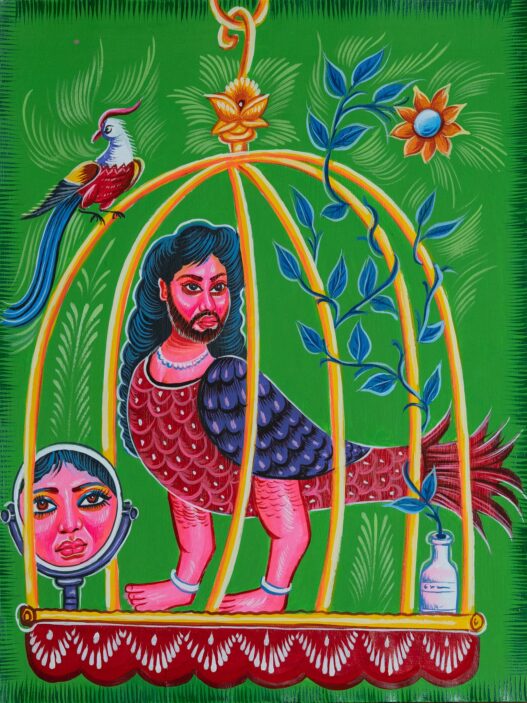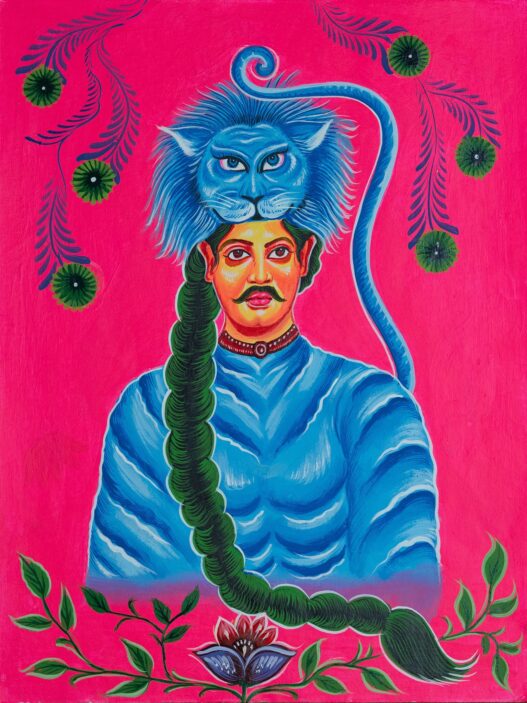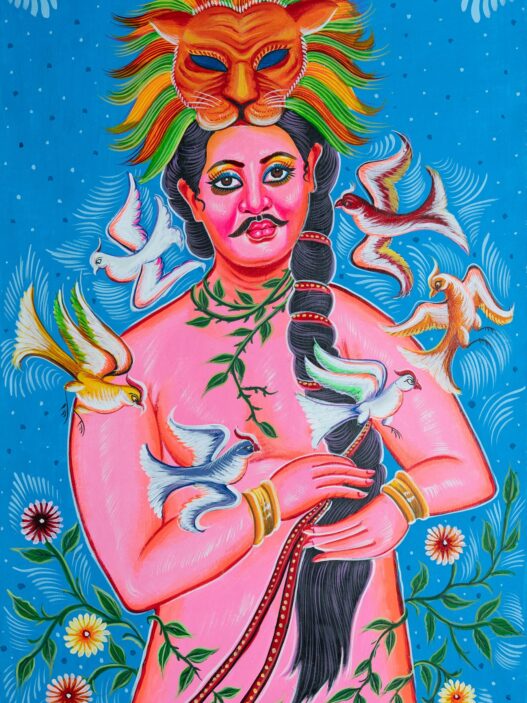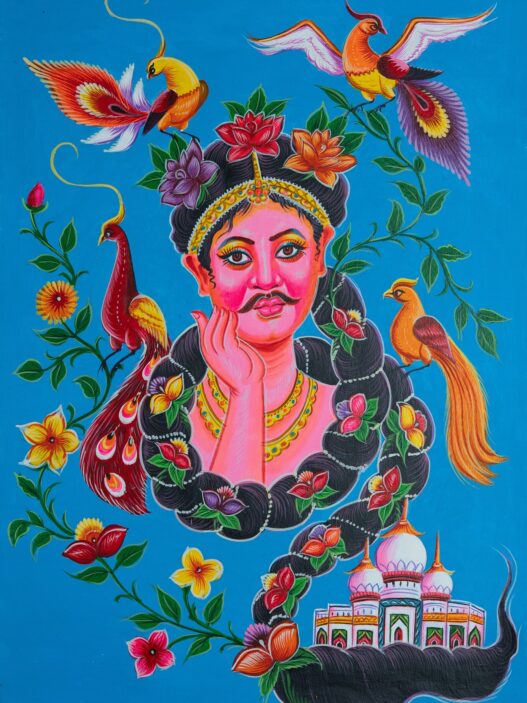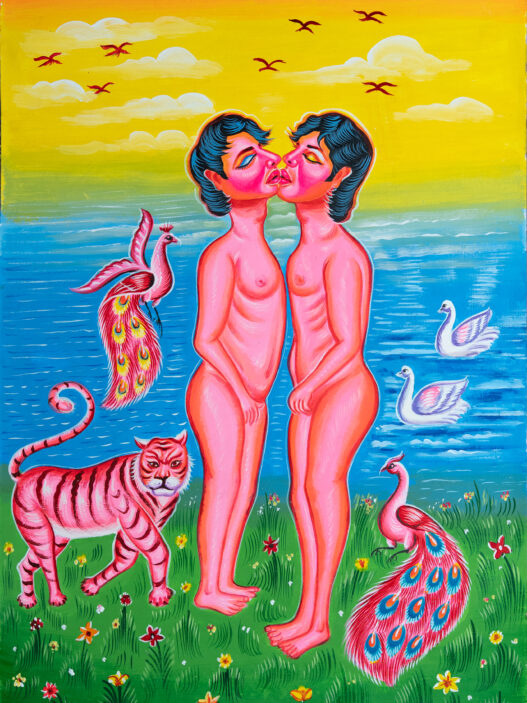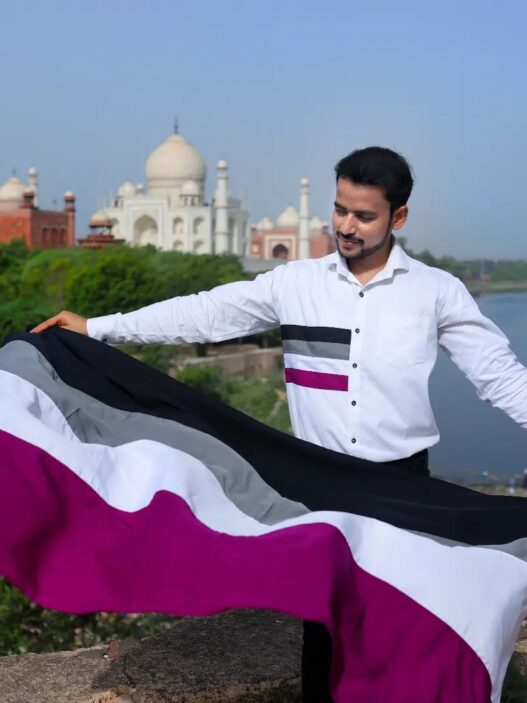


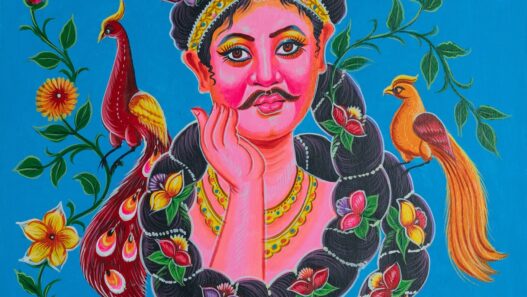

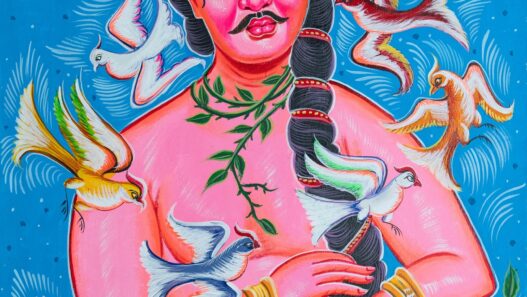
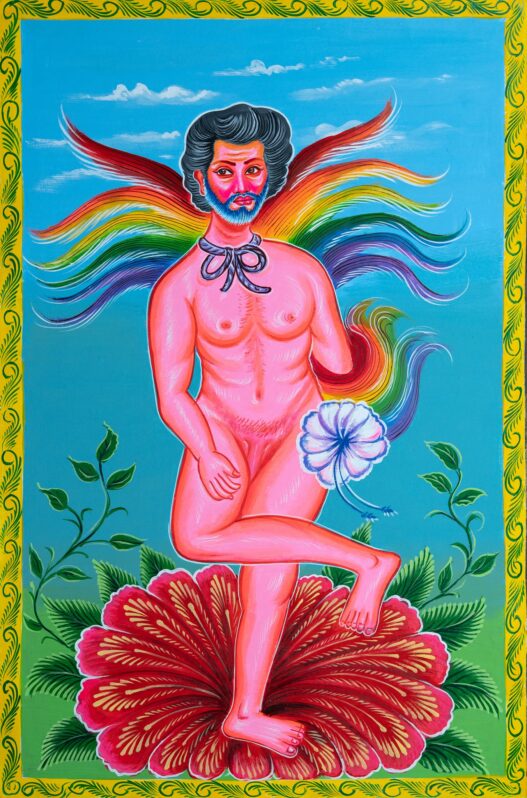
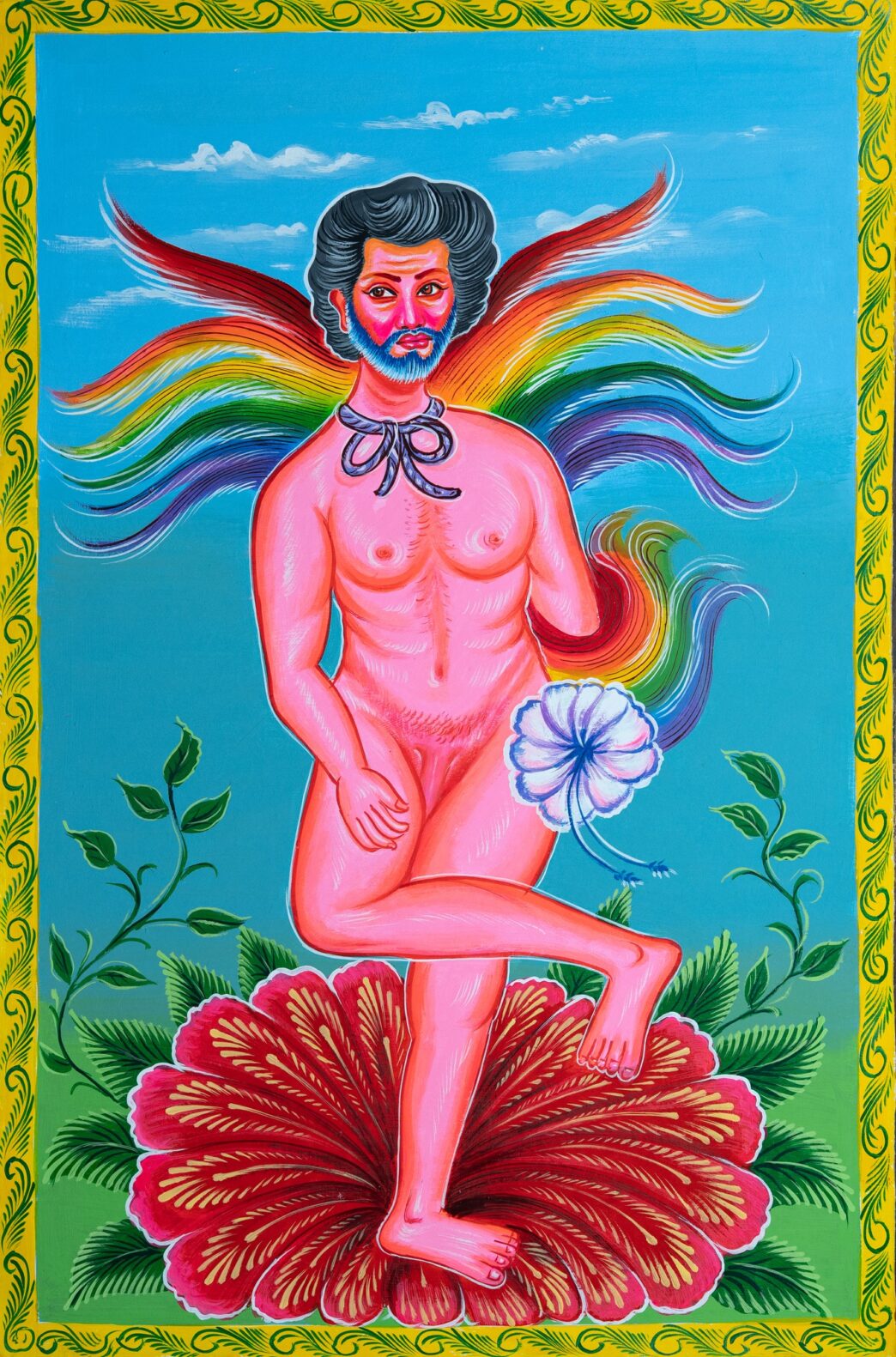
The of Sourav Chowdhury (b. 1975, Dhaka, Bangladesh) documents the personal, professional, and political journey of a man who defined freedom not by societal expectations but by the refusal to conform. Raised in the Dhanmondi neighborhood of Dhaka, Chowdhury pursued a life outside traditional norms of marriage and family, devoting himself instead to teaching, community engagement, and the cultivation of personal independence.
The collection provides insight into issues of gender, sexuality, politics, and survival in contemporary Bangladesh. It particularly highlights Chowdhury’s experiences as an aromantic and asexual man navigating a society where identity is largely tethered to marital and familial obligations. His narrative offers valuable perspectives on solitude, resilience, and resistance to cultural conformity.
The materials include one interview conducted by researcher Dipa Mahbuba Yasmin in Dhaka in 2025. The transcript preserves Chowdhury’s reflections on identity, criticism, and freedom.
Biographical Note
Sourav Chowdhury (1975 ) was born and raised in the Dhanmondi neighborhood of Dhaka, Bangladesh. He pursued higher education and later became a university lecturer, where he earned a reputation for discipline, rigor, and intellectual generosity.
In addition to his academic career, Chowdhury became involved in regional politics in order to assert independence and secure survival in a society he described as “cruel” and “dominated by animals in human form.” Through these political engagements, he carved out a space of power and autonomy.
Chowdhury is openly aromantic and asexual—identities rarely acknowledged in Bangladesh. He speaks openly about rejecting societal pressure to marry or have children, asserting instead the value of a solitary, self-directed life rooted in scholarship, nature, and personal freedom.
Neighbors often labeled him as “STRANGE” or “NARCISSISTIC,” but his students and close friends recognized him as a principled, uncompromising individual. Chowdhury himself framed his solitude not as loneliness, but as liberation.
Interview with Sourav Chowdhury
Location: Dhanmondi, Dhaka
Yasmin: Could you begin by telling me about your early life here in Dhanmondi?
Chowdhury: I was born here, in 1975. Dhanmondi was crowded even then, but there was still space to breathe. I grew up walking by the lake, chasing birds, watching hibiscus bloom red in May. My parents raised me like any other child—with expectations of studies, marriage, career. But very early, I knew my path would not be theirs.
Yasmin: When did you first realize that your life might not follow the conventional track of marriage and family?
Chowdhury: It was not a moment—it was a lifelong knowing. I never felt what others called romantic attraction. And sexual desire? No. My attachments were to books, to plants, to quietness. In Bangladesh, people measure your worth by whom you marry, how many children you raise. I never agreed. To me, freedom was in being complete on my own.
Yasmin: And yet, that independence must have come with challenges.
Chowdhury: Of course. This city is cruel. To survive alone, especially as a man who refuses family ties, you must fight. I entered politics not because I loved power, but because I needed it. Power protected me. Power allowed me to walk safely, to resist the animals of society who prey on the weak.
Yasmin: Many neighbors called you “strange,” even “narcissist.” How did you respond to that judgment?
Chowdhury: I smiled. I would tell them: When men measure their worth by salary, by promotions, by wives and children, I measure mine by peace. I am not a narcissist. I am simply enough for myself. People think solitude is emptiness. For me, solitude is full—full of flowers, books, moonlight, birdsong.
Yasmin: What sustained you in the face of such criticism?
Chowdhury: Nature. The rainbow, hibiscus, the peacock bird. And my students. I gave them discipline, but I also gave them guidance. Many call me strict, but those who understood me know I gave freely. I still guide them over phone calls. Their respect sustains me more than society’s approval ever could.
Yasmin: Looking back, do you see your life as lonely?
Chowdhury: No. They call me lonely. I know I am free. I chose not to perform rituals that mean nothing to me. I chose not to chase desires I never felt. I chose my own terms. And that choice—that is the truest form of life.
Yasmin: If you could leave one message for the next generation in Bangladesh, what would it be?
Chowdhury: Freedom is not in being what the world expects of you. Freedom is in being entirely, unapologetically, yourself.