




Case Title: Institutional Restrictions on Single Motherhood and Family Rights in Bangladesh
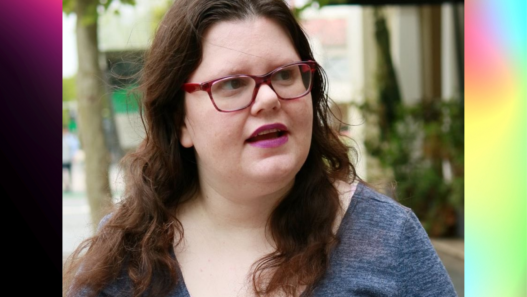
Name: Dipa Mahbuba Yasmin
Date of Interview: May 17, 2025
Location: Dhaka, Bangladesh
Background Information
Dipa Mahbuba Yasmin is a 36-year-old woman born and raised in Dhaka, Bangladesh. She identifies as unmarried and does not have any siblings following the passing of her only sibling on 7 December 2022. Following this loss, she began to experience intensified concerns about aging and dying without family support, particularly within a socio-cultural context where family systems are strongly structured around marriage and heterosexual kinship norms.
She reports that these concerns, combined with her lived experience as an unmarried woman, influenced her decision to pursue child custody as a form of long-term caregiving and familial continuity.
Interviewer: Could you please state your name, age, and a bit about your personal background for the record?
Dipa Mahbuba Yasmin: My name is Dipa Mahbuba Yasmin. I am 36 years old, unmarried, and I was born and raised here in Dhaka, Bangladesh. I am the only surviving child in my immediate family now, as my only sibling passed away on December 7, 2022.
Interviewer: How did the loss of your sibling impact your perspective on your future and your understanding of family in Bangladesh?
Dipa Mahbuba Yasmin: I had chosen to live alone as an asexual person in a hypersexual society, and I was content with my solitude. However, the sudden loss of my only sibling became a turning point that significantly reshaped my life plans and perspective.
In the socio-cultural context of Bangladesh, social support systems are largely structured around marriage and traditional family lineages. After becoming the only remaining member of my immediate family, I began to experience heightened anxiety about aging and the possibility of eventually dying without any familial support.
These lived realities, as an unmarried woman, deeply informed my decision to seek child custody. For me, this decision was not simply about parenting. It was also a conscious attempt to build long-term care, mutual support, and a sense of familial continuity—along with a conventional expectation of security and care in old age.
Interviewer: How would you describe your overall experience when you attempted to step outside those traditional family structures to seek custody?
Dipa Mahbuba Yasmin: I see myself as someone navigating and surviving within a rigid, binary, heteronormative, and deeply marriage-centric legal and social framework. My initial consideration was IVF (assisted or test-tube conception), but this path was strongly opposed by my parents, and I was also informed by medical professionals that such a procedure could not be legally pursued for an unmarried woman in my context.
Following this, I explored adoption through Chotomoni Nibas in Dhaka. However, this too proved nearly impossible. While both Bangladeshi law and Muslim Sharia law may, in principle, allow child custody for single women, in practice the state has not formally approved or facilitated single-mother custody arrangements to date.
These realities reflect the broader constraints embedded in the country’s definition of “family,” which remains narrowly structured around hetero marriage. In my attempt to seek custody of a child as an independent, unmarried woman, I ultimately found myself constrained and excluded by the system itself.
Interviewer: Can you walk me through the specific timeline and the legal steps you have taken to pursue child custody?
Dipa Mahbuba Yasmin: My active legal pursuit began in February 2023. I approached a state institution called Chotomani Nibas, Agailjhara, Barisal branch. I have to explicitly specify “child custody” because formal, legal adoption is not recognized under Bangladeshi law. Because our system is heavily influenced by Muslim Sharia law, adopted children are not legally permitted to become the legal heirs to a parent’s property.
During this process, I formally requested to be appointed as the legal guardian for a specific child named Afsana Mim. When I didn’t get a clear response, I followed up my initial requests with official written notices in 2024.
Interviewer: What was the official outcome or response to those written notices?
Dipa Mahbuba Yasmin: To this day, I have received absolutely no official written response. I have not been granted any form of legal consideration, nor has any custody arrangement been entertained. Total silence on paper.
Interviewer: When you interacted directly with the officials at Chotomoni Nibas, what kind of feedback or reasoning did they offer you regarding your application?
Dipa Mahbuba Yasmin: Because I am an unmarried woman, the authorities declined to provide any written response. No official letter of refusal or explanation was issued; all communication was given verbally. They stated that if I were to become a single mother, the child would be subjected to severe social stigma, being labeled in derogatory terms such as a “bastard child.” They expressed concern that they could not allow a child’s future to be “ruined” in this way. They further suggested that I should resolve the situation through marriage, implying that unless I entered a marital relationship with a man, there was no support or alternative pathway available through the government.
Interviewer: How did you respond to this, and what happened during your subsequent visits to the facility?
Dipa Mahbuba Yasmin: I refused to just walk away. I continued to visit the institution repeatedly over the following months, driven simply by the desire to meet, see, and connect with the child, Afsana Mimi.
Instead of showing empathy, the authorities resorted to intimidation. They threatened me directly, stating that if I attempted to take legal action against them or if I brought the case to the media for a public trial, they would completely block me from ever seeing the child again.
Interviewer: Did the government officials or institutional representatives suggest any alternative paths for you, or explain their criteria for who is deemed fit to take custody?
Dipa Mahbuba Yasmin: The representatives from this government organization advised me, in a deeply distressing manner, that if I was “that desperate” for a child, I should simply “buy one from outside” and use bribery to falsify birth records, presenting myself as a divorced single mother. When I clarified that I had never been married, they further suggested that I should first create a false marriage certificate, then obtain a fabricated divorce document, and only then arrange a falsified birth certificate for the child. They added that if I did not intend to obtain a passport for the child, such documentation might not be necessary; however, since I frequently travel abroad, they insisted that I would need to complete all of these fraudulent steps in order to take the child with me.
Through these statements, they made it explicitly clear that Bangladesh as institution only recognizes married, heterosexual infertile couples as eligible for child custody. In particular, they prioritize couples without biological children, especially those deemed biologically infertile and therefore unable to have children of their own.
Interviewer: Did they question your personal choice to remain unmarried while seeking to be a mother?
Dipa Mahbuba Yasmin: Yes, aggressively. They openly questioned why a fertile woman who simply chooses not to get married would want to create a single-mother household. In their worldview, a family cannot exist without the joint presence of both a mother and a father. They insisted that a real family strictly requires a couple bound together by a proper, legal marriage document.
Interviewer: How did these authorities characterize the backgrounds of the children in their care, and how did they define the state’s responsibility toward them?
Dipa Mahbuba Yasmin: The government representatives stated that the children in their facility are not actually orphans in the traditional sense. They claimed these children all have living biological parents but are the “output of illegal physical relationships.” Because the birth parents were unmarried, they abandoned the children to the state to avoid social stigma.
Therefore, the authorities argue that the state’s sole duty is to find a “proper” heterosexual married couple to clean up that narrative. They explicitly stated that a single woman cannot provide a father’s surname, which they view as paramount. From their perspective, handing a child over to a single woman would automatically cause the child to be labeled illegitimate—an outcome they described as a fundamental failure of state responsibility.
Summary
This case documents Dipa Mahbuba Yasmin’s reported experience of attempting to pursue legal child custody in Bangladesh as an unmarried woman. The account highlights her interpretation of structural, legal, and cultural barriers within state and institutional frameworks governing child guardianship, family recognition, and social legitimacy.