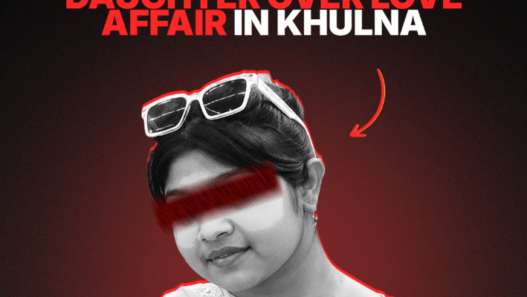





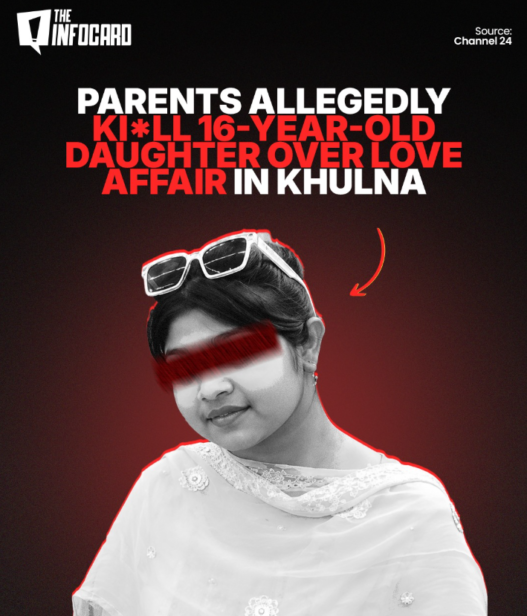
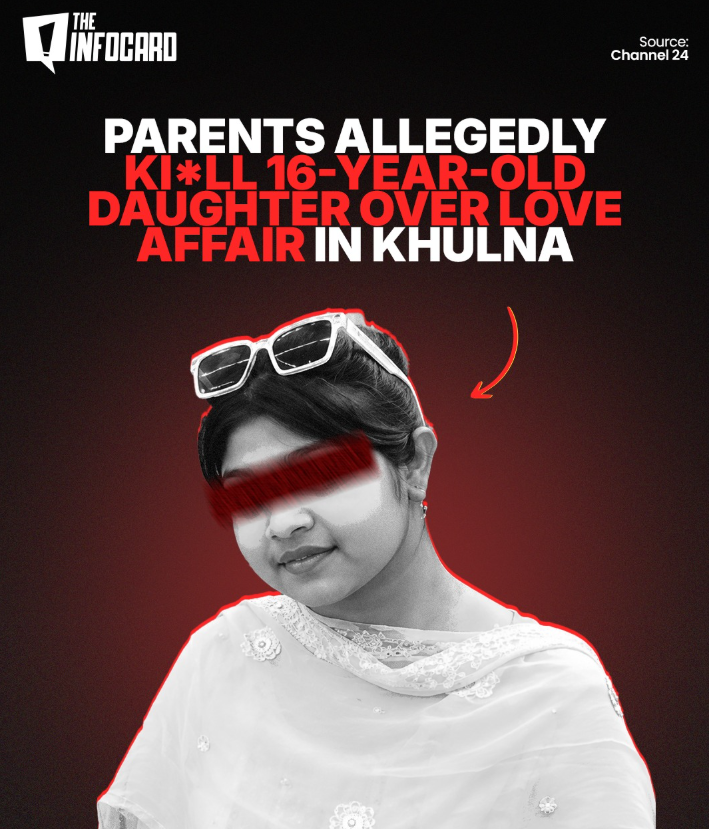
The brutal murder of 16-year-old Arfan Hossain Nirjana by her parents in Khulna- an act stemming from their refusal to accept her personal autonomy- is a harrowing indictment of a society that treats young women as property rather than individuals. While the mother has confessed to her complicity and the father remains at large, this tragedy reveals the lethal grip of patriarchal control.
By killing their daughter in the name of “family honor,” her parents have exposed the systemic violence inherent in a culture that sacrifices girls’ lives to preserve rigid, oppressive norms. This incident is not merely a crime; it is an urgent, devastating call to dismantle the structures that grant families the power to police, silence, and ultimately destroy the autonomy of women and girls.
How many more must lose their lives before we collectively reject the weaponization of “honor”?
It is profoundly alarming that for too many young girls, the “sanctuary” of the family home is transformed into the site of their erasure. When violence is enacted not by a faceless stranger, but within the domestic sphere—an institution society shields from scrutiny—it exposes a systemic failure to protect children where they are most vulnerable. We must confront the reality that for these girls, the domestic structure is not a place of safety, but a site of profound betrayal.
The circumstances surrounding her death are deeply disturbing: a girl reportedly punished with the ultimate violence for exercising agency over her own emotions, relationships, and future.
This was not simply an individual tragedy. It reflects a broader social structure that continues to treat women and girls not as autonomous individuals, but as carriers of family reputation, morality, and social status.
Bangladesh often comforts itself with the belief that so-called “honour killings” are problems that belong elsewhere — distant cultural phenomena with no relevance to our own society. Yet refusing to name a problem does not make it disappear. When violence is committed to punish a woman’s perceived disobedience, to control her relationships, or to preserve a family’s social standing, the motivation behind that violence deserves public scrutiny regardless of what terminology is used.
The silence surrounding these crimes is not accidental. Cases are frequently underreported, obscured by the language of “family disputes,” or treated as isolated incidents rather than symptoms of a wider pattern of gender-based violence. The result is a dangerous myth: that the family is inherently a sanctuary for women and girls.
For many, tragically, it is not.
Equally troubling is the way public discussion often shifts away from the actions of perpetrators and toward the behaviour of victims. Questions emerge about a young woman’s friendships, relationships, clothing, or personal choices, as though these details somehow determine the value of her life. Such narratives do not seek justice; they seek justification.
Victim-blaming performs a second act of violence against those who can no longer defend themselves.
Bangladesh has made significant progress in education, healthcare, and women’s participation in public life. Yet progress cannot be measured solely through statistics and economic growth. It must also be measured by whether girls can make decisions about their own lives without fear of punishment, coercion, or violence from those closest to them.
The media, legal institutions, educators, religious leaders, and civil society all have a responsibility to confront these realities honestly. Journalists must report these cases with care and without sensationalism. Human rights organisations must document and investigate patterns of family-based gender violence. Policymakers must ensure that laws addressing domestic violence and violence against women are enforced effectively and consistently.
Most importantly, society must abandon the comforting fiction that acknowledging these crimes somehow damages national culture or family values.
There is no honour in violence.
There is no honour in silencing women.
And there is certainly no honour in the death of a child.
If Bangladesh wishes to protect its daughters, the first step is simple but difficult: to look directly at the problem and call it by its name.